How a 40,000-Hour Trio Controls a Rust Server
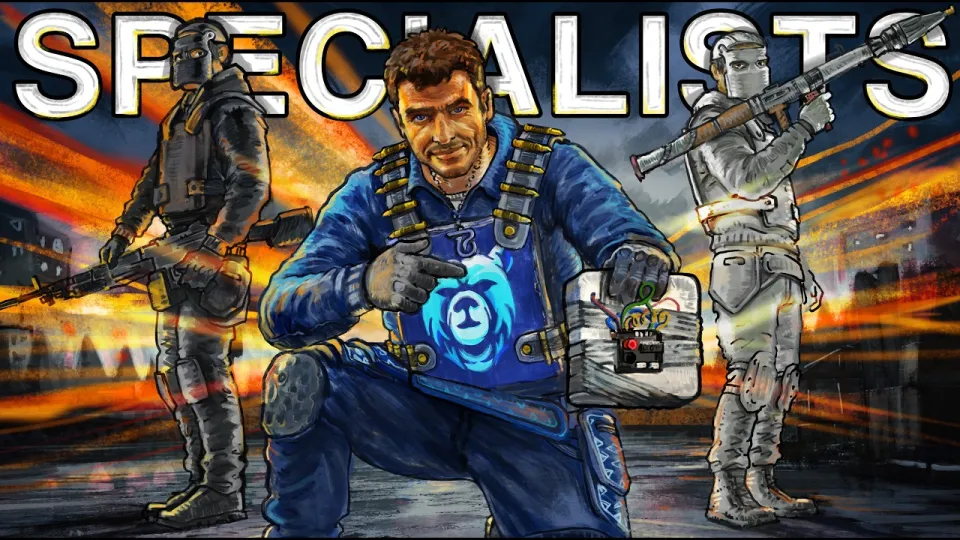
Video: How a 40,000-Hour Trio CONTROLS a SERVER - Rust
Want articles like this for your own video to promote it on YouTube and Google? Order them through the Telegram bot @sat_sit_bot. Articles with your video embedded are written and posted by the bot itself — on popular topical sites (no ads). Free trial — 50 articles.
· based on the channel Blooprint
A 40,000-hour trio controls a Rust server by converting experience into tempo: they finish wipe-day progression faster than the competition, build a base that survives online raids, and then spend the rest of the wipe raiding rivals before those rivals can scale up. Three players with that much combined playtime do not need better aim than everyone else — they need fewer mistakes, faster decisions and a shared plan. The full run is documented in Blooprint's trio video, and you can watch the group live on Blooprint's Twitch channel.
What a 40,000-hour trio actually means in Rust
Hours in Rust translate into pattern recognition, not raw mechanical skill. A player with several thousand hours knows which monument gives the fastest scrap per minute, how long a furnace takes to finish, what a raid sounds like from inside a base, and when a fight is worth taking. Multiply that by three players who already know each other's habits and you get a group that almost never wastes a decision.
The trio in this wipe is Blooprint, Disfigure and Nine. Their combined experience is the headline number, but the practical advantage is division of labour: one player farms and crafts, one pushes monuments, one scouts and trades. On a 500+ population server, that structure is the difference between a base that exists on day one and a base that gets raided on day one.
The wipe-day progression order that wins high-pop servers
Winning a crowded server starts with a fixed order of operations that the trio repeats every wipe. The sequence below is the standard high-level route, and the logic holds whether you play solo or in a group of three.
- Spawn, grab a tool and stone, and place a small starter base within the first hour — a 1x1 or 2x1 with a door and a sleeping bag is enough.
- Push a tier-1 workbench immediately and craft the essentials: hatchet, pickaxe, bow, arrows, and a few medical syringes.
- Farm scrap toward a tier-2 workbench before chasing gear; the workbench unlocks the guns and explosives that make everything else possible.
- Secure a furnace base and keep smelting constantly — metal frags are the real currency of the first two days.
- Start raiding small, soft targets once you have explosives, and take the loot rather than the base.
The trio's version of this route is compressed: three players farming in parallel means the tier-2 workbench arrives hours before most of the server has one, and the first raids happen while neighbours are still on bows.
Base design and why the build matters more than the loot
A base on a high-pop server is a deterrent first and a storage container second. The trio's approach is to keep the footprint small, layer the honeycomb, and make the loot room expensive to reach relative to what a raider would gain. Small bases are cheaper to maintain, harder to spot and quicker to rebuild after a raid.
Practical rules that apply to any trio:
- Keep the core compact so every wall you add protects the same loot room.
- Separate the workbench area from the loot room so a partial raid does not end the wipe.
- Use multiple small bases and forward operating bases near monuments instead of one giant compound.
- Stock building materials continuously; a base that can be repaired mid-raid survives raids it should not.
The cosmetic side matters too — a distinctive wall skin makes a base recognisable on the map, and viewers of the video consistently point to the dark catacomb-style walls as one of the best-looking builds in recent Rust content.
Roaming, gear fear and the M2 question
Control of a server is decided in the open, not inside the base. The trio roams with top-tier weapons — the M2 and the L9 are the recurring examples — because gear in a box protects nothing. A weapon that stays in storage is a weapon the enemy effectively owns.
This is where most groups fail. Players who hoard their best kits lose the fights that matter and never learn how to use the guns they farmed for. The counter-argument, raised by viewers watching other groups roam with military-grade weapons, is that losing an M2 to a bad fight hurts. The answer is volume: on a 500+ pop server you will lose kits, and the trio treats every lost kit as the cost of the next one.
Roam habits that separate experienced groups from lucky ones:
- Never roam without a clear objective — a monument, a raid, or a specific base.
- Carry enough meds to survive a second fight, not just the first.
- Communicate positions constantly; three players who know where each other are can collapse on a target in seconds.
- Disengage early when the fight turns; a retreat costs nothing, a death costs a kit.
Online raids and the defence side of control
Raiding is how a trio converts an advantage into a wipe-defining position, and online raids are where the hours show most clearly. Attacking an active base means dealing with counter-raids, defenders on respawn, and the constant risk of a third party arriving. The trio's pattern is to scout the target, cut off approaches, and commit only when the defenders are confirmed online and the loot is worth the explosives.
Defence is the mirror image, and it is where most groups lose their base. Useful defensive habits:
- Keep a defensive kit in a separate, cheap-to-reach box so you can re-gear during a raid.
- Use turrets and traps on approach routes rather than inside the loot room.
- Have an exit plan: a secondary base or a stash nearby means a lost raid is not a lost wipe.
- Rebuild immediately after a raid ends; the window before the next attacker arrives is short.
The amusing moments in these long raids — a horse flipping a minibike, a defender eating a chimichanga mid-fight — are part of the format, but they sit on top of a very disciplined routine.
Common viewer questions about trio play
Viewers who have never played Rust often ask how much of the trio's success is skill and how much is simply time invested. The honest answer is that the two are the same thing: thousands of hours produce the judgement that looks like skill in a fight. A player with 50 hours can win a gunfight; a player with 5,000 hours knows which gunfights to take.
Another recurring question is whether the trio's dominance is suspicious — some viewers have wondered how certain players suddenly become accurate. On a server with hundreds of competitors, the more mundane explanation is usually correct: prepared loadouts, better positioning, and voice comms that let three players act as one unit. That is also the part any group can copy, regardless of hours played.
A third theme is nostalgia. Long-time viewers miss earlier trio lineups and the era when the group dominated with top-tier gear on open roams. The current format keeps that spirit: the trio still takes risks, still loses kits, and still raids the competition rather than sitting on loot.
Useful links
- Blooprint on Twitch — live streams of wipes like this one
- Blooprint on Kick — alternative streaming platform
- Blooprint on TikTok — short clips and highlights
- Blooprint on Twitter — announcements and wipe updates
- Blooprint Discord — community and group-finding
Bottom line
Controlling a Rust server with three players comes down to tempo, base discipline and the willingness to use the gear you farm. The 40,000-hour figure is a shorthand for thousands of small decisions made correctly, from the first stone pickaxe to the last online raid of the wipe. Blooprint's trio video is a useful case study because it shows the whole arc — the quiet start, the fast escalation and the raids that follow — rather than only the highlights. If you want to see the next wipe as it happens, follow along at https://www.twitch.tv/blooprint. The breakdown above is based on the Blooprint channel's trio format and the way experienced groups operate on high-population servers.
Key takeaways
- Blooprint's trio for this wipe: Blooprint, Disfigure and Nine — three players with roughly 40,000 combined hours of Rust experience.
- The wipe is played on a 500+ population server, where early progression speed decides who owns the map.
- Control comes from tempo: fast starter base, fast tier-2 workbench, then raiding the competition before they can consolidate.
- Lurkers roaming with M2 and L9 gear show that gear fear, not skill, is the real bottleneck on high-pop servers.
- The trio's edge is communication and shared loot discipline, not individual aim.
Questions & answers
How do three players control a server with 500+ population?
By moving faster than everyone else on wipe day and then raiding before rivals can scale. A trio that reaches a tier-2 workbench and explosives early can dictate which bases survive, because most of the server is still on primitive gear.
Is roaming with an M2 or L9 worth the risk?
Yes, if the group treats kits as replaceable. Weapons kept in storage protect nothing; roaming with top-tier guns wins fights, takes loot and denies the enemy the same gear. The cost is losing kits, which is normal on a crowded server.
What is the biggest mistake new Rust players make in a group?
Gear fear and poor communication. New groups hoard their best weapons and fail to share information during fights, while experienced trios call positions constantly and re-gear from cheap defensive boxes during raids.
Do you need thousands of hours to play like this?
No, but you need the habits those hours produce: a fixed progression order, a compact base, constant farming and the discipline to disengage from bad fights. Those habits can be learned in a few wipes if you review what went wrong each time.
Source: How a 40,000-Hour Trio CONTROLS a SERVER - Rust · Markdown version